
What Is Scantle Roofing?
Scantle roofing is the traditional Cornish method of slating a roof in diminishing courses of small, randomly-sized slates, larger at the eaves, gradually smaller towards the ridge. It’s the authentic roof of West Cornwall’s old cottages and listed buildings, and a properly laid scantle roof is the work of a roofer who’s mastered the craft, not just the material.
By Steve Biggs, NVQ-qualified roofer · Last updated 22 September 2026
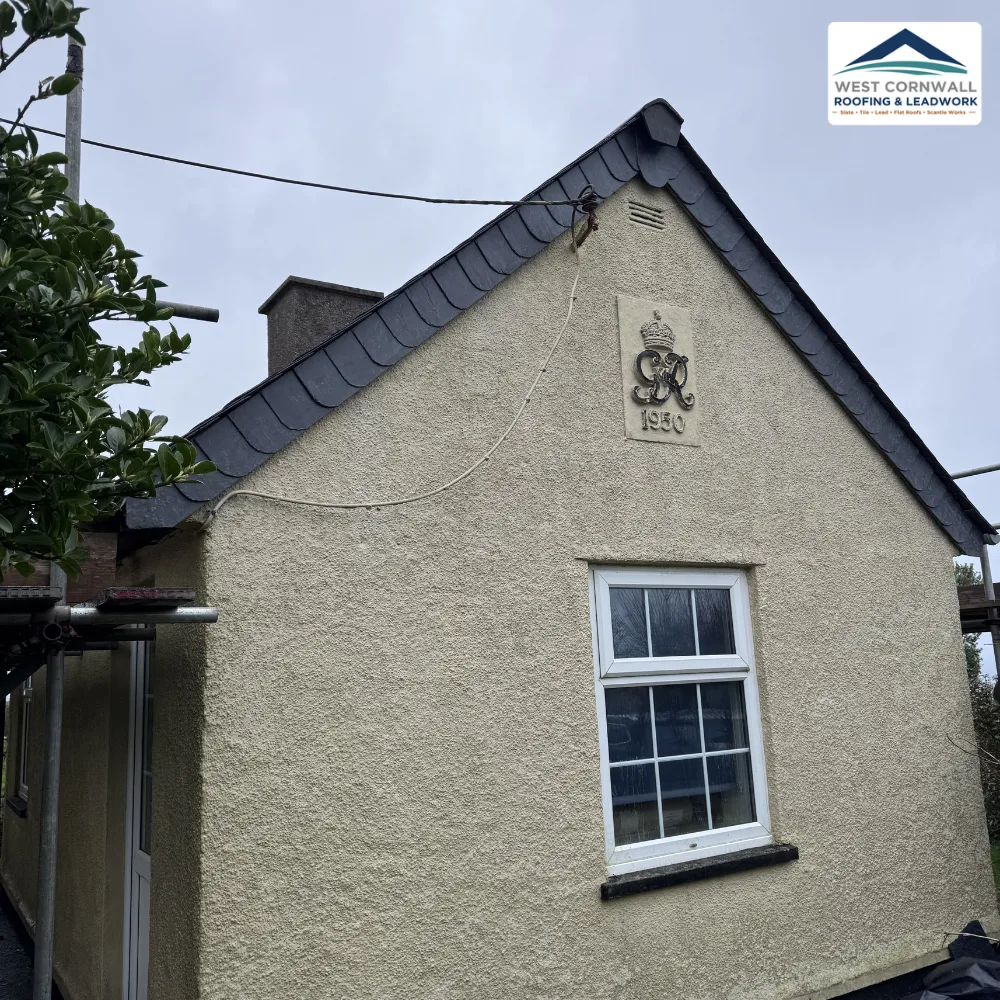
Scantle Roofing, Defined
Scantle is a traditional random-slating technique native to Cornwall and the South West, in which slates of varying sizes are laid in diminishing courses and secured with nails, and, in the oldest method, bedded in a lime mortar. Unlike a modern uniform slate roof where every slate is the same size, a scantle roof grades from large slates at the bottom to small slates at the top, each course sized to the one below it. The result is the soft, textured, slightly irregular roof you see on genuine period properties across Penwith and the Lizard, a finish that’s unmistakably West Cornwall, and one that takes real skill to lay correctly.
Diminishing Courses Explained
The heart of scantle work is the diminishing course. The largest, heaviest slates are laid at the eaves, where the roof carries the most water, and each course above is fractionally smaller, all the way up to the ridge. This isn’t decoration, it’s structural sense. Larger slates at the bottom shed the greatest volume of run-off, while smaller slates higher up reduce weight where the roof needs it least.
Setting out diminishing courses correctly is what gives a true scantle roof its character. Each slate is sorted, sized and gauged so the courses step down evenly and the whole roof reads as one graded surface. It’s slow, skilled, hand-sorted work, the kind of craft a heritage roof is built on, and exactly the kind Steve takes pride in getting right.
Wet-Lay vs Dry-Lay Scantle
There are two ways a scantle roof is laid, and the right one depends on the property.
Beds the slates in a lime-and-sand mortar as they’re laid, the most traditional method, and the one most often specified on listed buildings and in conservation areas. It produces the authentic original finish and is highly specialist, hand-built work.
Nails the diminishing courses without the mortar bedding, keeping the traditional graded look while suiting properties where a fully bedded roof isn’t required.
On a heritage or listed building, the method is often guided by the property’s status and the local conservation officer. Steve advises on the correct approach for the building and works to whatever the conservation requirements call for, so the finished roof is right for the property and signed off without trouble.
Reclaimed & Delabole Slate
An authentic scantle roof is laid in local slate. Delabole slate, quarried in north Cornwall, is the classic Cornish slate, and reclaimed slate salvaged from old roofs is often used to match an existing building exactly. Matching the slate matters: the colour, size and weathering of Cornish slate are part of what makes a heritage roof look right on its street, and a mismatched modern slate can stand out badly on a period property. Where the budget or supply doesn’t allow full reclaimed slate, Steve will talk you through what’s realistic and what the trade-offs are, so you can make the right call for the building with all the facts in front of you.
Why It’s the Authentic West Cornwall Roof
Scantle is the roof West Cornwall’s older buildings were designed for, and on a genuine period or listed property it remains the correct, long-lasting finish. It’s worth knowing that true scantle work is genuinely specialist, labour-intensive, hand-sorted, and rarer than a standard slate roof, which is why many old scantle roofs are now re-covered in new uniform slate on cost grounds. That’s a perfectly good roof in its own right, just not the original. If you want the authentic Cornish finish kept on a heritage building, you want a roofer who does the diminishing-course work properly and understands the craft behind it. That’s exactly the work this business is named for.
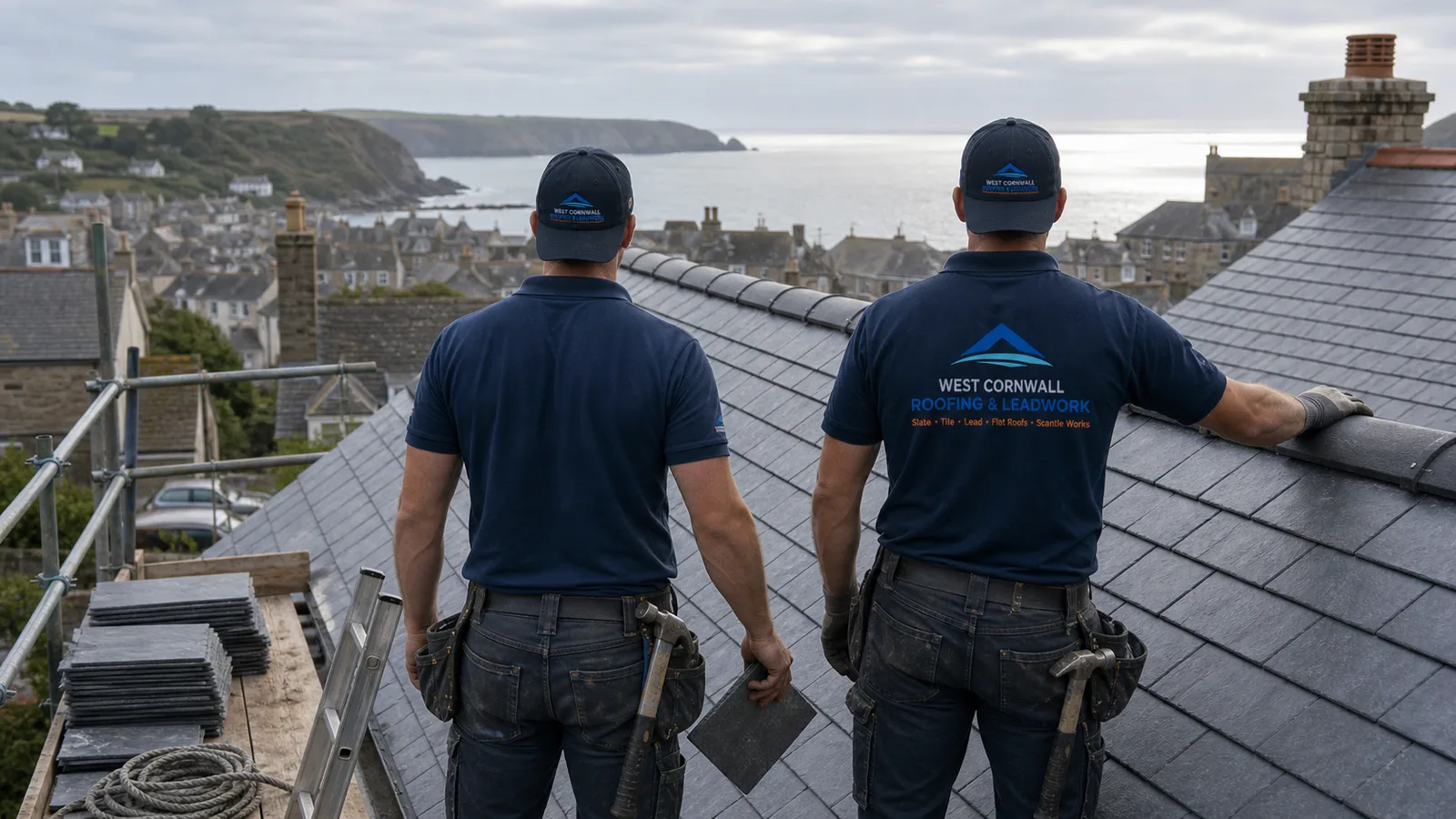
Steve Biggs
Steve is the owner of West Cornwall Roofing & Leadwork, an NVQ-qualified roofer and leadwork specialist who carries out traditional scantle and heritage roofing on period and listed Cornish properties across Penzance and West Cornwall.
“Scantle is the roof these buildings were designed for. Lay the diminishing courses properly and you keep the building authentic.”Steve Biggs, Owner & Lead Roofer
Scantle Roofing: Frequently Asked Questions
What is scantle roofing?+
What’s the difference between wet-lay and dry-lay scantle?+
Can you do scantle roofs on listed buildings and in conservation areas?+
Do you use reclaimed or Delabole slate?+
Talk to a Cornwall Scantle & Heritage Roofer
If you’ve got a traditional or listed roof in West Cornwall, get expert advice from a roofer who’s mastered the craft. Read more about scantle & heritage roofing, explore slate & tile roofing, or find out more about Steve.
Last updated: 22 September 2026